Submersible Pump In Grouped Product View
A submerged parking site. A pool overdue for cleaning. A litter-clogged drainage. The submersible pump collection by Davey are specific for underwater tasking, with inventory that includes grinder and cutter pumps, as well as a strong motor for slurry transfer. Australian Standard-approved for world-class quality control.
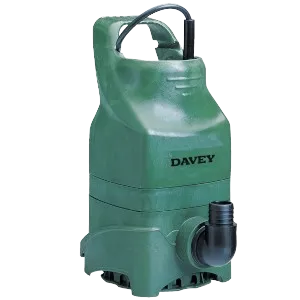


Submersible Pump In Individual Product View
DynaPond Submersible Water Pump
Borehole Submersible Pump
Double Case Submersible Water Pump
General Purpose Dewatering Pump
Residential High Head Drainage Pump


Vortex Sump Pump
Single Channel Impeller Submersible Water Pump
Single Channel Impeller Submersible Water Pump - 316 Stainless Steel Models
Sewage Cutter Submersible Pump
Sewage Grinder Submersible Pump
KZN Slurry Pump
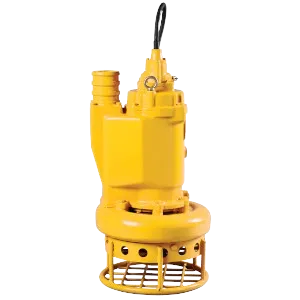
Submersible Pump
Featured here is the complete range of Davey Malaysia’s submergible water pumps that are developed as part of the overall catalogue available. The sub-branches are properly added to assimilate into individual industries found, and with the accurate mechanical engineering application, hydration can be automated to save manpower and time. Davey’s submersible pump category is manufactured to be completely electrical-based, and an industrial naming that can also be synonymised as an electropump, or an electric submersible pump (ESP). Davey’s invested settling to create the immersion variant can be considered as one of the grandest across the world – just as almost every field anywhere would require the stated pump the same. And for all of its variations, the complete contribution has amounted to one of the most sought variations of the centrifugal pump within Malaysia, pulling a vested interest for Davey to kickstart and gather for immediate market capitalisation. And this revenue will continue to grow with the future to come, through rising population and ever-building civilisation and needs of the submersible pump.
The naming is defined on its own, with submersible as the capacity of being placed underwater, and the pump itself as the invention of a mechanised device that is needed to move liquids. The duo combines to become submersible pump as a contraption capable to moving hydration upwardly or elsewhere whenever needed.
Area of Submergible Application
Depending on the sizing and customisation, Davey’s line of submersible water pumps can be sought for a versatile application in different fields:
Fish Pond And/Or Aquarium
While seamless and natural across every other interconnected ecosystems found, the nature of household aquariums and small fish ponds tend to be created by artificial means. The result of manmade consequences have us reliant towards a miniature submersible pump system in order to circulate oxygen and filtration, leading to a healthier marine life living. Due to the fecal content, bacterial buildup, and/or even debris from air particles, food waste, and even fish scales, in such a circumstance, these sump pumps are designed to be ran with slightly foul water without becoming defected. And within such an understanding, the engineers have built a strainer to filter out the unnecessary debris, while far important to have the submerged centrifugal pump run in 24/7 continuum, in order to improve water quality and also even out the distribution of cleaner fluids. For fish ponds and aquariums, about 1 hp (horsepower) or 2 hp are actively used to cycle the water flow.
Fountain
Submersible pump are also needed to pressurise and maintain water feature for decorative means in any fountain. No different than the fish ponds, the primary function of the electropump here is centred to circulating water, just as it flushes out in a vertical manner or downward to exhibit a design presentation. The submerged pump for this can be both mini in size to a medium one depending on the architecture of the landscape.
Construction Site
Dewatering is highly emphasised to ensure an utmost dry condition to maintain structural stability amid the property development, and it may be the result of water table being surfaced because of constant excavating, or the accumulation of rainwater through heavy downpour that necessitates Davey’s submersible pump. By removing excess water, this aids to prevent landslides from occurring, and one that is caused by the increased weight of the soil (from the dampening), to the cohesion reduction that ultimately forms liquefaction.
Sewage And/Or Treatment Plants
Submersible electropumps are incredibly important for the wastewater plant where sewer solids can eventually clog up drainage and pipings, causing a major overhaul if this isn’t treated properly. With the application of submersible pump, it would emphasise safety standards as movements of wastage are encouraged while reducing toxic and smelly gases from leaking out.
Flood Management
Flooding can be the result of heavy rain, or because of a piping that’s broken and leaking out gallons of fluids. Combined by trapped drainage systems, the submersible water pump can be deployed as a means to enable stormwater transfer in order to eliminate excess dilution. Flood management remains consistently important in urban settlement due to the result of increasing human activity as the years go by, which can be deadly when housing, vehicles, and personal belonging and lives become fully immersed. Because of this, Davey’s submersible pump becomes a tool to be used during search and rescue operation, as well as for first responders during these crucial times of need.
As A Reserved Pump
Although this might seem far-fetched, the electric submersible pump can be found to be treated as a back-up water pump in controlled operation rooms. This is evident in places like the hospital, basement level, parking lot, to even condomiums and apartments where industrial pump chamber can be seen. It would serve as a contingency instrument to dewater the room / vicinity due to two defined scenarios:
Low Area: Places like the basement floor are below ground zone, which can pose significant trouble when hydration becomes trapped and would definitely require a submersible pump to eradicate unwanted water out. Normally, the sump pit is inherently built to manage these are stored water, yet excess fluids would mean that it has been overly accumulated and will require an external aiding tool (which is the submersible pump itself) to apprehend the situation.
Electrical Hazard: Industrial pumps for high-rise buildings are generally large in sizing, and is directly connected to power circuits. Because of this, any leakage or flooding into the controlled pump room can cause catastrophic failure in the existing system, which is why the submersible pump variant is needed to remove liquids out.
Grease Trap
Another collective interest centred to the whims and biddings of using one of Davey’s submersible pump collection includes the exercising use of grease trap to capture fatty acids. Seen within restaurants, shopping outlets, factories, and even the outdoors having a manhole itself, the submergible water pump is placed into it to transfer oil and/or fats into a collection tank for an ease of disposal. This layer of scum is caught in the installation just before entering the main sewage system, and is the primary setup where the centrifugal pump is used to extract on an occasional basis for maintenance reasons.
Swimming Pool
In the playing grounds of water sports, submersible pumps can also be used to drain swimming pools. This can be related based-off the electropump’s frequency of utilisation through the following:
Cleaning Maintenance: By day end of the inevitable closure of the swimming pool area, the managements of hotel, condominium, and/or apartment would tend to deploy the submersible pump for the sake of removing dirty water out. This is backed by fungi-growing microbes spreaded across the air that requires daily cleaning and circulation, ensuring a healthier ecosystem for swimmers with the submersible pump.
Pool Draining: Whether by deep-levels of repair through tiles changing, to thorough and comprehensive need of deep cleaning, pool drainage will be aided by the application of submersible pumps that are placed in the deepest part of the pool, in order to clear out most of the water within. During this manner of operation, the amount of time alongside manpower becomes saved through the submergible gadget that is well-fit for long-term heavy duty action.
Minimising Water Level: One of the instrumental findings behind the implementing the submersible pump is to reduce excess water level, and this can be the result of rainwater diluting the pool’s ecosystem, to even minimising further in preparation for the winterising period.
Rainwater For Garden Rationing
Davey’s category of submersible pumping can be seen in cases of using collected rainwater for practical benefits, and this is triangulated with resources offered by nature itself. A rainfall harvesting system (RWS) is strategically placed on the garden vicinity of the household, and whenever it becomes filled, a submersible pump installed inside the storage tank can help to irrigate your shrubs and flowery plants. Of course, a hose can be attached to help direct the splash needed.
Save Cost: The connection of making use whatever mother earth has to offer is beautiful and complementing to any instrument mankind has. In the same scenario where Malaysia’s state provider for hydration is maintained to enable drenching, by fitting in a submersible pump to lean upon naturally-occurring resources, anyone can save up on utility bill from month-to-month basis – depending on the downpour.
Irrigation System: A trickle irrigation feeder can be activated with the help of a submersible pump, and it’s essential due to its hydraulic coverage that sends water to the furthest stretch of the pipings found.
Septic Tank
In rural domestic grounds, households without urbanised infrastructure will often feature a septic tank that must be routinely cleaned by the members themselves, paving a way by Davey’s findings for the use of submersible pump. This is needed to move effluent from the primary tank into a secondary system as to drain and maintain the septic tank for continued usage. When the submersible pumping is done, these can be released on the leach field.
Abattoir Wash Down
In the meat industry, where flesh, cartilage, and even bones are chopped and discarded, the remnants of the livestock parts are then funneled down into a tank where a combination of solid waste and fluids becomes processed by a washdown pump. Depending on the type, it may or may not be a submersible pump to handle the various sort. And when it isn’t, another is added onto the bottom inside of the container. This submersible pump iteration will inevitably feature a cutter, or perhaps a grinder to diminish the hard pieces down into portable macerate volumes of scum and/or sludge.
Eventually, the wastewater ultimately becomes treated in a plant to meet health regulations, requiring another form of centrifugal pump which then could be extracted to create byproducts of animal feed and/or mineral fertilisers and the likes.
Deep Well Water For Agriculture
The open well application can intertwine with agricultural efforts to draw up hydration for irrigating means. And when stumbling upon this event, a borewell or submersible pump can be put into use to pressurise and collect water. Equally, dampening can be distributed across the sprinklers evenly for acres of the land, so spraying hydration is achievable with the electropump itself.
Livestock Watering: Similarly, for farm animals, the constancy of clean liquids must be supplied readily with a water pump for nourishing objective, while also ensuring that the livestock remains healthy as their lives carry on. In the same manner as agriculture, a submersible pump can fill the hydration in a dugout the same as sustaining crops.
Factories
Davey’s line of submersible pumps can also be found in various factories for flexible purposes, and in various conditional environment the machine can work for reliable outcomes.
Cooling System: The sump pump is capable of circulating coolants that helps to regulate overheated materials, or even within the textile industry to cool down fabrics after a hefty processing of dyeing, printing, and the likes. On the other hand, pure metal creation can also be cooled the same with a submersible pump, just as it would pressurise water to be flown into the heating sector for the same cooling reasons.
Wastewater Movement: Another common example of the usage of submersible pump lies in managing wastewater to be excreted out. Discarded water like this is perhaps the most common examplar of large-scale pump application.
Oil Rig
Following the timeline itself, the origins of electric submersible pump begun within this field of fossil fuel extraction. It was the inventor and engineer Armais Arutunoff that first created this version of a water pump, and one that is inherently designed to be placed within the submerged ambience to draw out petroleum.
Initially, the submersile pump remained as a single phase model that generates a low-powered pressurisation, and yet this iteration spun to led about gradual changes of stronger pumps. To date, a 3 phase variant is no stranger to collect hydrocarbon fuel even much quicker, and this is to thank to complete fluid-proof construct that the founder introduced.
Slurry Pumping
The mixture of slurries can come in many forms across a wide array of industries and even through natural formation. This necessitates a submergible pump to dewater or even to move the blend in order to process things in the fabrication line. The centrifugal force generated is what propels the thick and sluggish liquid that is dragging across the pipeline to be sent elsewhere, which is also the situation where strongly-powered heavy duty submersible pumps of 7.5 hp or even 10 hp are utilised.
Common Pump Anatomy
In the development of any submersible pump, it is important to know that how it is built has remained nigh-consistent throughout the iterations of the electropump. In fact, this has barely changed since time immemorial, mainly because the centrifugal pump is an age-old yet stable technology that was founded since the discovery of its physics moment. Below are the following anatomical findings that are commonly manufactured in the production line across every single Davey’s submersible pumps found:
Volute Casing
This is the external shell that’s found to house the interior components and to compartmentalise accordingly to different stages in a water pump. Similarly, the volute has already been well-researched to improve thermodynamics efficiency by funneling a curved vortex outwardly as water becomes pressurised to be released in its exit.
Suction Inlet
This is the entrance where liquids becomes sucked in by the centrifugal pump. The suction is generated by the impellers to draw in water, and in usual circumstances, the non-submerged water pumps would have to achieve a self-priming state by forming a vacuum to inhibit small air gaps within. This is to prevent cavitation from causing internal damage across the impellers, and yet something that is completely absent for the submersible pump. As it is underwater itself, the pump is always in a status of a positive priming state just as the inlet is filled with hydration flowing in consistently. And because of the constant uptake of liquids, it is safe to say that water hammer can be completely prevented with this electropump. circuitry of the submersible pump. It is these voltaic semiconductor components that is interchanging electrons into mechanical force within the centrifugal ump, and is the most sensitive aspect that can be burnt when it is exposed to water.
Discharging Outlet
This is the exit point where pressurised hydration becomes gushed out from the submersible pump. The discharge outlet in this case tends to be projected vertically, and is exited to wherever the hose and piping directed the water at, ensuring the pump’s transference is successful to prevent flooding or to continue circulation. the treatment plant where human waste can contaminate, to deep well for drawing up hydration, to sewage clean-up, or even for different water ecosystems when submerged.
Hermetically-Sealed TEFC Motor
The only known segment of any kind of centrifugal pump that is completely void of water. Each of these engines are inherently designed to be almost completely sealed and without access to the outside world, which would mean cleaning the submersible pump’s engine is also highly improbable. In the scientific community, such an invention is defined as a TEFC motor (or totally-enclosed, fan-cooled motor in full sentencing) as a form of protection mechanism to regulate the submersible pump’s temperatures from imminent destruction (due to hydration access). And two reasons holds the truth in why this is accomplished:
Expensive: When comparing cost-per-individual-part in the gradual build-up of the submersible pump, the TEFC motor remains the most expensive section of the machine itself. Because of this being one of the main reasons, heavy defensive integration becomes added for a core focus on the submersible pump’s longevity. This can be said to be similar to dry running protection of the operations within the volute itself by attaching a pressure tank, or even using a smart inverter (variable-frequency drive or VFD), and is done so to prevent impending impairment of the pump’s inner pieces.
Short-Circuitry: The engine must be kept away from any forms of contaminants and liquids because this ensures the prevention of short-circuitry of the submersible pump. It is these voltaic semiconductor components that is interchanging electrons into mechanical force within the centrifugal ump, and is the most sensitive aspect that can be burnt when it is exposed to water.
Generally, regardless of the manufacturer the submersible pump are generally built to be hermetically-sealed. In here, the hermetic seal is a practice of water-proofing the wiring and towards the engine section of the pump itself, inhibiting foreign air and hydration that was mentioned from accessing. The main benefit of this application is that submersible pumps become applicable to be used across very extreme conditions, in places such as the treatment plant where human waste can contaminate, to deep well for drawing up hydration, to sewage clean-up, or even for different water ecosystems when submerged.
Power Cable
The sole cord of the submerging pump that is specifically plugged onto a wall socket, and where electricity is supplied to the motor section itself. Depending on Davey’s collection, the pump’s power (p) consumption may go as high as 750w (Watt), or 0.75 kW (Kilowatt) and even higher. This goes in-line with being properly insulated to prevent water ingress, while also ensuring that the submersible pump reaches to ideal depths to yield out hydration.
Pump Shaft
Of course, the pump’s shaft is a constant machine element itself as found in any variations. Being a rotating tool, this piece in all of Davey’s submersible pump category is an important component that fastens the impellers and diffusers in place, and alongside it, the shaft is made with a higher graded stainless steel (typically, at SS316) to resist against corrosion. Equally, the shaft is also the only part that connects from the TEFC motor side, breaching past the gasket and backplate, and connecting back into the volute setion of the submersible pump.
Another focus centred to the long shaft is its capability of holding every internal components and its chambers into a fixated place, maximising the functionality of the submersible water pump itself. As voltage surges into the engine, the motor converts these galvanic charges into mechanical energy where it is transferred into the shaft to begin spinning. With the impellers having vanes attached, the devices rotate the same and begins spawning centrifugal force, passing kinetic energy for acceleration of the fluids within to be pushed outwardly.
Bearing
Another hardware found in commonality of all pumps are bearings within, which are also stainless steel in material in smoothened ball surface to reduce friction. Fixed into position for rotational efficiency, the stated impellers can then be found on the bearing housing for operatioonal reasons. As the motorised engine starts, a lot of vibrational energies tend to be generated in any submersible pump, but the bearings inside remains as one of the principle that reduces vibrational levels for functional reasons.
Strainer
The strainer may be related to swimming pool-variants of pump designs by Davey as a manufacturer, or even in similarity across other brands. In here, large solid particles and chunks are blocked out of permeating through the strainer section of Davey’s submersible pump, and this will always be found just after the suction inlet. The reason of this placement is to minimise and/or reduce waste from cycling into the electropump itself, and this is poised to cause imminent damage if it isn’t blocked out of.
For Davey Malaysia’s DynaPond, the submersible pump itself has a strainer that can be opened to be cleaned on a regular basis.
Float Switch
One of the modernising benefit that scales with time is the introduction of a float switch and this is easily seen to be fastened on a sump pump for automatic start-stop regulation. As the float switch itself is an electrical device, it is powered by the very same current to actively use the submersible pump itself, and this is key to ensure longevity of practical use.
Just as the submersible pump is completely set underwater for full operation, the float switch would be found suspended on the water or even floating upwardly – depending on the depth of the water. This is used as a gauge to determine if the dampening has dropped to the specific idealised level out of the dewatering, and once it has been reached, the submersible pump would be found mechanically shut-off.
The float switch mechanism can also be considered as a form of a dry running protection system to safeguard against the lack of surrounding liquids, and this can equally cause permanent damage towards the impellers and the likes.
Mechanical Seal
This is also another component that is readily placed across every single water pumps found. All of Davey’s series of the submersible pump catalogue would feature a singular mechanical seal that is fitted onto the shaft to secure a water-tight regime, inhibiting water from entering the motorised compartment itself.
The mechanical seal is a miniature and complicated technology comprising of moving parts, offering dynamic mobility to the joint portions (volute segment and the hermetically-sealed motor) of the submersible pump, and these are listed below:
Gland
The gland in mechanical engineering is a device that stations the mechanical seal in place against rotating motions of the submersible pump. As a flange itself, this maintains the alignment of the seal while containing fluids in its sector from entering the crucial part of submersible pump’s engine itself.
With its clamping strength, other accessories like the O-ring and gasket becomes compressed to thwart water further.
Shear Pin
A shear pin is installed as part of the pieces that makes up the mechanical seal, and this is a tool to transmit torque from the engine towards other movable parts within Davey’s submersible pump. The shear pin, which can also be known as a dowel pin or drive pin, also drives to set the positioning accurately with the shaft part.
Lock Ring
Like a washer, this is a component also found across any of Davey’s centrifugal pumps’ assortment, and where its purpose is to hold the stationary aspect of the mechanical seal into place, to maintain orientation and also maximising the performance.
Davey's Submersible Pump Branding
A serious black for the name is met with a bright and alerting yellow as its base for colouring, and this is the aesthetic that sets Davey for all of its water pumps, and relatable products available.
Teal usage, on the other hand, is practiced on an accent emphasis where the hue formulates a modernising touch across Davey’s products, which is seen in the DynaPond submersible pump where it’s used as a base.
From here, a distinction of high contrast tends to be seen with Davey’s bright yellow-painted pumps, making it stand among even among the environment. This would leave the inventory being easily noticeable and retrievable whenever the submersible pump is no longer in use.
Besides that, the non-reactive coating offers a layer to fend against oxidation, just as the submersible pumps here tend to be deployed across any fields and environments in extreme conditions.
Submersible Pumps' Frequently Asked Questions (FAQs)
How do you test a 3 wire submersible well pump?
For the 3 wire testing, you would have to examine the pump itself with a multimeter. These 3 wirings are the live, neutral, and earth wires respectively, and all are available across any AC electrical systems. You may begin by following these few steps:
Turn off the power: It’s incredibly crucial to switch the power off first to ensure your wellbeing before the initial test phases of the submersible pump. This is to prevent accidental electrocution, as well as to examine the Ohm reading and others with the exception of voltage spike (which requires the power to be on).
Disconnect Cable: Once the power is off, carefully disconnect the pump’s power cable from the socket. Next, open the 3-pin plug by unscrewing it to unveil the wiring within, and this can be tested after to determine if the circuitry of the submersible pump is faulty or not.
Multimeter Setup: Preset the multimeter to begin reading your initial basic measurement, and this can be the Ohm resistance, to the capacitance, or even temperature of the submersible pump. You may also want to examine the individual power leads found, which are the series of L1, L2, and L3, as well as the ground wire after. Two following results can be obtained:
- Open Loop: The open loop, or ‘OL’, is the defining term as emulated by the multimeter to denote that the submersible water pump’s semiconducting resistors are working fine, exhibiting very high resistance and showing that the motor remains functional.
- Short-Circuit: This is a defective status that shows itself whenever the resistance level is significantly low than normal value, portraying that the submersible centrifugal pump itself is damaged.
Testing: You may begin by pressing the test probe of your multimeter onto each of the wires found in the submersible pump. Once again, it must be completely detached from any electrical source for safety reasons. The power source is successfully supplied by the battery within, which converts chemical energy onto electrical by the multimeter itself, and this is how resistance is achieved by the submersible pump.
How do you clean a submersible pump?
To clean a submersible pump, this is entirely dependent on the field of application at which you’re using it for.
For example, when you have been using it to dewater the swimming pool and/or aquarium tank, a simple rinsing that’s combined with a mild soap wash and a soft brush down is more than enough to maintain hygiene. You may do this across all of its internal parts by disassembling it individually, and this is to prioritise a complete wipe down so no debris, mud, and/or dirt can be found within the centrifugal pump.
In another effort, when you’re using a sump pump for the sake of sewage treatment, then an industrial disinfection with hygienic processing will be applied for regulatory safety and health standards.
You may first begin by disconnecting the pump in entirety, and then assess the physical structure to determine if there are any leaks within.
Calcium Build-Up: Hard, raw, or even the sewage water would feature a whole lot of impurities. As such, any type and brand of submersible pumps that are completely submerged into such liquids would eventually develop calcium deposits, and you may have to soak it under vinegar for a period of time or even diluted hydrochloric acid if needed. If it is the latter acidic solution, we advise to consult a professional to aid you in managing the cleaning to prevent any form of injury.
Other Sediment: Minerals or even phosphate sediment can be built onto your submersible pump, and this may also require specialised solution to treat it accordingly.
Other Considerations: There may exist a series of guidelines and precautionary steps that are set forth by your manufacturer themselves, and this is the case with Davey and our submersible pumps. As such, it is preferred that you follow through the necessary advises to ensure the longevity of your electropumps. Some of these considerations can include:
- Maintenance Instructions: Cleaning directions can be given by the pump maker themselves, and this may also include the type of solutions as recommended.
- Safety Steps: There can be protective measures that are imposed to ensure you do not harm yourself during the submersible pump’s cleaning. This is the case whenever you are handling with hydrochloric acid, where safety steps like wearing goggles and gloves are a necessity to prevent injuring yourself.
- Electrical Safety: This is another outlier found in the pump’s manual, and you are often advised to unplug as a safe yardage. Besides that, before any forms of cleaning are done, your submersible pump should be dried out.
Why does my submersible pump keep tripping out?
Whenever your submersible pump trips out routinely, it is often an issue highlighting an electrical fault, or a clogged up component. Either ways, it remains significant to identify root-causes to unwire and resolve the pump just so it remains fully-functional once again.
In Davey’s encounter, these are some of the reasons that denotes the issue of submergible centrifugal pump tripping:
Problematic Float Switch: A malfunctioned float switch can result in unnecessary start-stop, leading to continuous tripping and in longer term, an impending destruction on the submersible pump.
Motor: There are times of extensive running that have caused an irreparable wreckage on the engine itself, and the price / cost to replace it is the utmost expensive among all of the submersible pump’s repairs (and often advised to replace anew). Because of this, the trip may be created out of it.
Burnt Circuitry: This can be an eventual cause from current overloading (e.g: going above 220V than what the resistors can handle), altogether damaging the submersible pump’s circuitry itself.
Other Environmental Factors: Strong viscosity where liquids remain sticky, or even boiling temperatures can affect and strain the submersible pump to its extremity. And because of this, this can be one of the reasons that have enabled the tripping.
How do you keep submersible pump from clogging?
A great deal of keeping submersible pumps from clogging up is to use the product and attachments to the right situation. For example, in places where flood management is conducted, it’s highly likely that you’d want a submersible pump with a cutter to chop on existing debris floating around and into it.
Secondly, try to suspend the electric submersible pump in the middle or near the bottom of the pit, this is because sediments will eventually sink down and are often build-up, causing dirt water to be murky and enters the inlet when sucked.
How many watts does a submersible pump use?
The number of watts (W in symbol) that a submersible pump use differs from one design to another, and from one manufacturer to the next. This is because of the technological implication being fitted into, so this question remains an open one with no true definite answer.
What size of submersible pump do I need?
The main factor determining the size of one’s chosen submersible pump is dependent entirely on the field of application itself. For example, a pond by the household garden will not require an industrial pump. Instead, this would be counter productive, and a small-sized one (maybe even 2-3 inch or so) is all of a just-nice fit.
Where do you put the check valve on a submersible pump?
A check valve should be installed on the discharge outlet of any water pump, and this include the sump pump version as well. Please install it just before the first pipe bending to prevent head resistance. It’s important to place the check valve on the releasing end of the hydration because you would want to prevent a backflow of liquids, and this can cause the water hammer phenomena.
How much oil goes in a submersible pump?
The amount of oil that enters the submersible pump is dependent on the flow rate that a submergible centrifugal pump can intake, and this can also be more or less—once again—depending on the design of the manufacturer. Hence, the oil that it can goes into is subjective.
How do you check a submersible pump's capacitor?
To check on a submersible pump’s capacitor, you would have to measure it with a multimeter at the setting of capacitance mode.