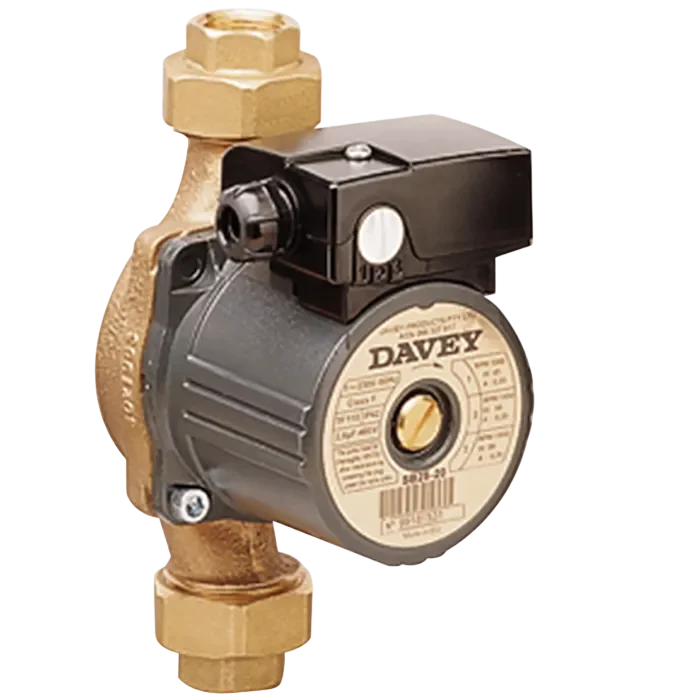
Davey's Circulator Pump
Key features:
- Standard automatic pressure system type.
- Suitable for domestic and commercial installations.
- For houses, motels, small apartment buildings, & solar heating circuits.
- 24 months warranty for pump & motor.
- Fixed pressure setting on every usage.
- Easy installation, no setting required.

Classified As:
Overview of Davey's Circulation Pump
The circulation pump by Davey range is engineered for efficient water circulation in domestic hot water systems, hydronic heating loops, HVAC circuits, and central heating boiler installations. These pumps are designed to provide stable flow rate, maintain hydraulic head, and deliver smooth liquid movement through closed-loop and open-loop systems, ensuring consistent water temperature and pressure. The pumps are compatible with potable water, de-oxygenated water, and treated liquids, while being resistant to corrosion and suitable for installation in indoor or outdoor mechanical rooms.
This range is widely applied in residential and commercial installations, including water heaters, hot water recirculation systems, small-scale heating loops, boiler connections, and hydronic distribution circuits. They are also used for portable water purification, domestic water circulation, and central heating expansion loop applications, integrating seamlessly with valves, pumps, and control systems.
Circulation Pump Variants
| Davey’s Circulation Pump Variants | Product Code (SKU) |
| SC20-25 | |
| SC20-25 | |
| SB30-25 | |
| SS30-25 | |
| SXM32-45 |
- Hydraulic performance class (flow rate and head)
- Motor voltage, phase, and power rating
- Pump body material (cast iron, bronze, or stainless steel)
Method of Identification
Like every other water pumps found, there exists a method of identification that aids to easily identify the series of Davey’s centrifugal pumps.
This unique identifier that has been established aligns with that of inventory management across the global warehousing of Davey Water Products Pty Ltd, which goes to say that no two electropumps and/or even diesel / fossil pumps would overlap in terms of identification.
In the case of the circulatory pump, it has been carefully assigned to have the following product code:
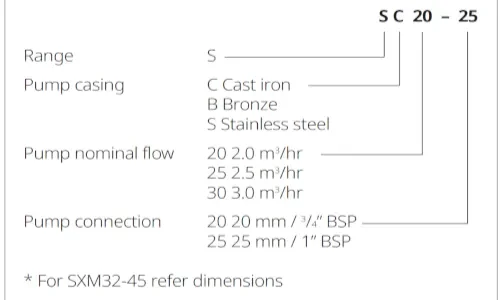
“SX XX-XX“
- The alphabetical figure that begins with ‘S‘ describes the Circulation Pump series.
- After ‘S’, the following ‘alphabet’ characterises the pump’s casing. Based on the image shown, the letter ‘C‘ is referring to ‘cast iron‘ as its covering base.
- What comes after completing the alphabetical symbols are numerical figures, and in this case, the initial numbers before the dash represents the circulation pump’s nominal flow rate found. Based on the imagery example given, SC20-XX explains a nominal flow rate of 2.0 metre cube per hour (m3/hr) found.
- Lastly, right after the dash, the circulation pump has another set of numerical figure that explains for the connection towards the British Standard Pipe (BSP) fitting. And once again, in the case of the picture, the numbering figures describes SC20-25, which details the connection of 20mm / 1″ pipes of BSP fitting.
Attachment
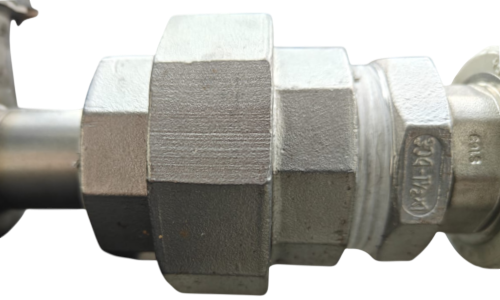
High-Temperature Resistant Barrel Union
The circulator pump includes barrel unions with threaded ports, allowing direct connection to plumbing pipework from ¾ inch (≈19 mm) to 1¼ inch (≈32 mm).
These unions simplify installation, enable easy disassembly for maintenance, and allow replacement of pump cartridges without disturbing the piping network.
The unions also reduce mechanical stress at the connection points, supporting long-term reliability in domestic and commercial water circulation systems.
Control Valve
The circulator pump can be integrated with a control valve, which regulates the flow rate through the plumbing system. This valve is essential in hydronic heating circuits and domestic hot water recirculation loops, allowing the pump to maintain stable hydraulic head and consistent system pressure. By adjusting the valve, engineers can balance flow across multiple branches in central heating or HVAC installations. The control valve also helps reduce water hammer by dampening pressure surges when pumps start or stop.
Solenoid Valve
A solenoid valve can be installed to automate the circulator pump operation within heating, cooling, or domestic water loops. The solenoid receives electrical signals from thermostats or building management systems to open or close, enabling precise control of fluid movement. This integration is especially useful in solar heating circuits, dual-loop hot water systems, or centralized HVAC systems where water flow must respond dynamically to temperature or occupancy demands.
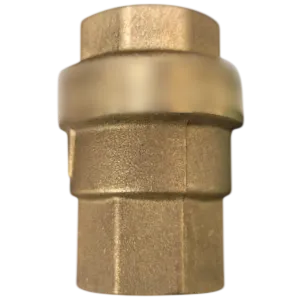
(A high temperature-resistant check valve to be installed as part of the water system alongside the Circulator pump. The image featured here is taken at a bird’s eye view.)
High-Temperature Resistant Check Valve
The circulator can work in conjunction with a check valve, which prevents backflow within the pipe network.
This ensures that hot water or chilled water flows in the intended direction and prevents system pressure fluctuations that could damage the pump or connected equipment.
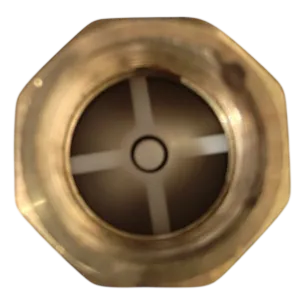
(A check valve image taken from the view of the flow inlet where its inner seat component can be seen.)
Check valves are especially critical in closed-loop hydronic systems, boiler circuits, and potable water recirculation setups.
Properly installed check valves also reduce unnecessary energy consumption by the pump and maintain efficient hydraulic performance.
Expansion Tank Integration
While not physically part of the pump, the circulator is compatible with expansion tanks in closed-loop hydronic systems. Expansion tanks absorb excess pressure caused by thermal expansion of water, reducing stress on piping, joints, and the pump casing. Integration with expansion tanks minimizes water hammer, improves system longevity, and ensures stable operation in central heating loops or solar water heating systems.
Certification
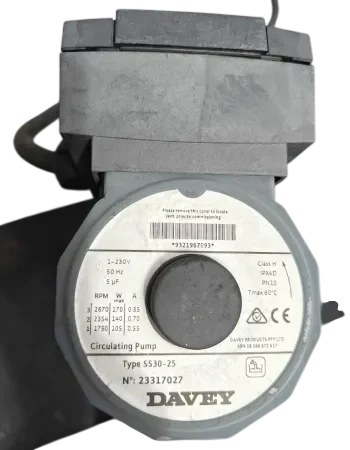
Stamped on top of the Circulating pump’s motor casing, a series of technical specification portraying its brief operating limits, as well as recognised certification can be seen.
The short information imprint is telling to technicians and on-site water pump engineers that if Davey’s Circulator is adequate for that specific location installation, as circumstances can very from one situation to another.
But with that said, the primary certification set that comes with this pump are:
ISO 9001: The pumps are manufactured to ISO 9001 quality standards and comply with potable water regulations. This ensures safe operation in domestic water systems, small-scale commercial buildings, and hydronic heating loops. Certified for corrosion resistance, the pumps are suitable for use with de-oxygenated and treated water.
CE Marking: Conformité Européenne (or CE Marking) is a compulsory certificate for pumps sold within the European Union, signifying the compliance conformity for safety, health, and environmental protection legislation. This set of accreditation aids Davey Water Products Pty Ltd to move freely across more than 30 European countries without fail.
TEFC Motor
The circulator uses a high-efficiency TEFC (Totally Enclosed Fan Cooled) electric motor designed for continuous operation. It typically operates on 230 V single-phase or 50 Hz power, with fractional horsepower output suitable for domestic and commercial heating circuits. The motor converts electrical energy into mechanical rotation, directly driving the pump shaft and impeller to generate centrifugal force. Bearings are lubricated by the pumped liquid, reducing wear and maintenance requirements. Thermal overload protection ensures safe operation under high temperature or high flow conditions, while IP56-rated construction protects against dust and water spray.
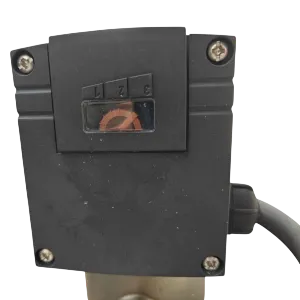
(The front view of Davey’s Circulator pump that shows the totally-enclosed fan-cooled motor from another angle.)
Capacitor (High Starting Torque)
The circulator’s built-in high-capacity capacitor provides sufficient starting torque for the pump motor, enabling reliable start-up even under high head or high friction conditions in plumbing loops. This ensures that the pump can overcome initial system resistance, such as valves, long pipe runs, or thermostatic mixing valves, without excessive current draw.
Motor Overload Protection
The circulator integrates automatic thermal overload protection, which safeguards the motor from overheating during prolonged operation or blocked discharge conditions. This feature provides long-term motor reliability, reduces downtime, and eliminates the need for external motor protection in most domestic and small commercial installations.
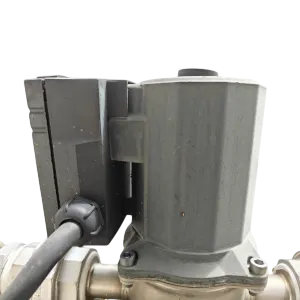
(The side view of Davey’s circulating pump that shows the totally-enclosed fan-cooled motor from another angle.)
Suction Inlet
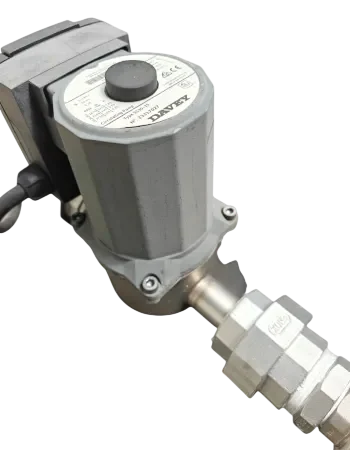
Standard inlet and outlet connections are threaded BSP (British Standard Pipe), typically 1 inch (≈ 25 mm), compatible with domestic and small commercial plumbing systems. The design ensures smooth fluid entry into the impeller, minimizes turbulence, and reduces cavitation risk by maintaining adequate NPSH (Net Positive Suction Head). Proper inlet installation is critical for long-term pump efficiency and reliability in domestic hot water or boiler circulation systems.
Manual Bleed / Priming Plug: A manual bleed or priming plug is included above the suction inlet, allowing operators to remove trapped air during startup. Proper bleeding ensures the pump operates at maximum efficiency, prevents cavitation, and maintains stable flow through the system. In domestic hot water systems or hydronic loops, this feature is particularly useful during initial installation or after maintenance.
Volute
In a centrifugal pump, the volute is a spiral-shaped casing designed to convert kinetic energy into pressure energy after the fluid leaves the impeller. As the impeller rotates, it imparts high tangential velocity to the liquid. The volute collects this flow around the impeller periphery and provides a progressively increasing cross-sectional area, which reduces fluid velocity according to the continuity principle. This deceleration results in a corresponding rise in static pressure, improving hydraulic efficiency and enabling effective discharge performance.
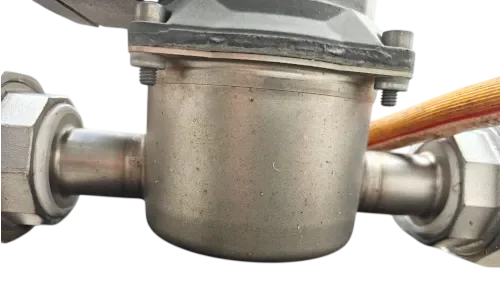
In the case of Davey’s circulation pump, the volute (or what is officially known as the shell casing in Davey’s documentation) features few material iterations that makes up the flowing motion of liquids:
- Cast iron
- Bronze
- Stainless steel
One of the primary reasons behind the robust selection of metals for the Circulation pump’s cover is its capability of enduring high heat and cold levels (or its excellence in heat conducting), which goes to say of its capacity of delivering waters of varying temperatures. In addition to this, metallic alloys chosen are durable which does resists against external forces that could spill or leak dangerously hot waters from the circulation pump.
Backplate And/Or Mechanical Seal
The backplate supports the mechanical seal and maintains alignment between the rotating shaft and pump casing. The mechanical seal typically uses silicon carbide faces to resist wear, chemical corrosion, and high temperature water exposure. This ensures long-term leak-free operation, protects the motor bearings, and allows the pump to maintain pressure and hydraulic stability under varying load conditions.
O-Ring & Spacers
Nitrile rubber O-rings are used to seal static joints, including casing connections and cartridge assembly interfaces.
Spacers maintain precise axial alignment between impeller, shaft, and mechanical seal, reducing vibration, improving bearing life, and maintaining consistent hydraulic performance.
These components are essential for safe operation in domestic and small commercial water circulation systems.

Operating Limits
| Operating Limits | ||
| Capacities to | 165 lpm | |
| Heads up to | 70 kPa | |
| Maximum working pressure | 1000 kpa | |
| Temperature | SC20-25 | -10°C to +95°C |
| SB25-20 | ||
| SB30-25 | ||
| SS30-25 | -10°C to +110°C | |
| SXM32-45 | ||
| Maximum ambient temperature | +40°C | |
| Port ND | 20 to 32mm | |
| Speed | See Table | |
| Power supply | 1 x 230V | |
| Frequency | 50Hz | |
| Insulation class | F (155°C) | |
| Protection | IP44 | |
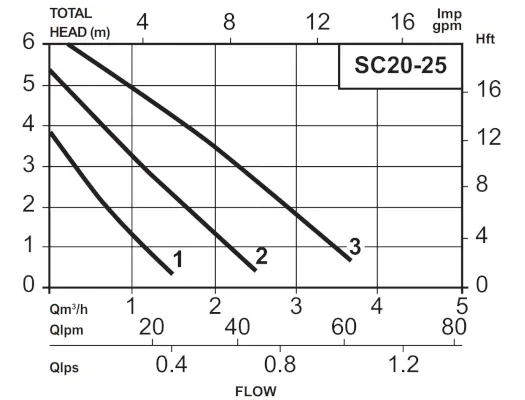
SC20-25 Circulator Pump's Hydraulic Performance
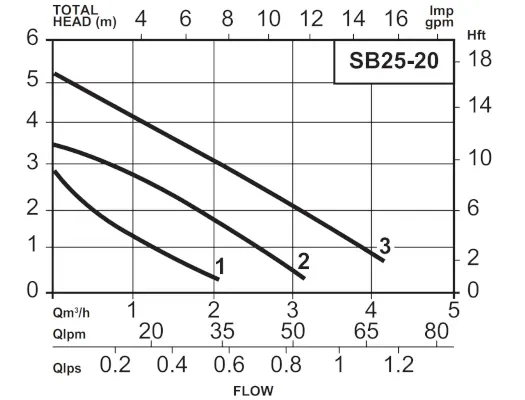
SC25-20 Circulator Pump's Hydraulic Performance
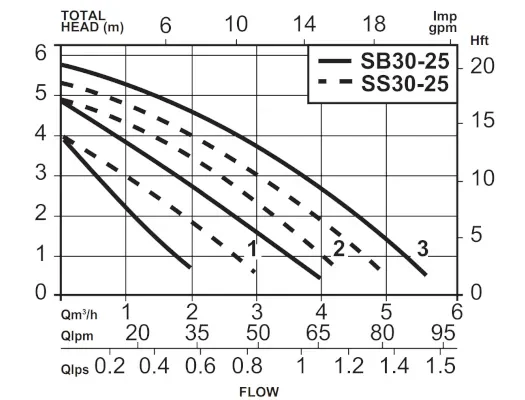
SC30-25 And SS30-25 Circulator Pump's Hydraulic Performance
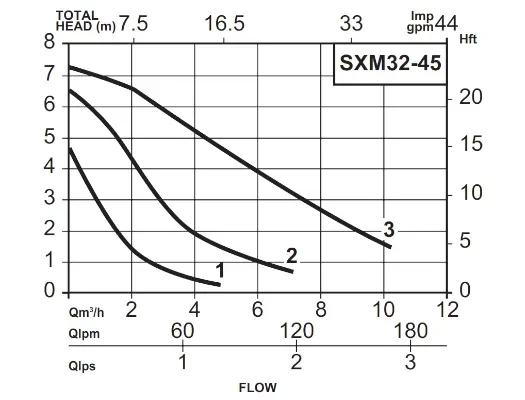
SXM32-45 Circulator Pump's Hydraulic Performance
Included In The Box
Circulation Pump
User Manual
Proof of Purchase
24 Months of Manufacturer Warranty
Contact Us